

7 Reasons to Invest in Gated Residential Plots Near Mopa Airport, Goa

Imagine owning a residential plot in Goa where you can build your dream home, enjoy a peaceful lifestyle, and stay connected to important destinations. With the development of Mopa Airport, North Goa is attracting attention from people looking for property and long-term opportunities.

Goa has always been popular for its beaches, tourism, and relaxed lifestyle. But the region is also gaining interest from property buyers who want more than just a holiday destination.

The opening of Manohar International Airport at Mopa has improved air connectivity to North Goa. Along with better road access and growing interest in the region, it has made nearby residential locations worth exploring.

For buyers looking for privacy, planned surroundings, and the freedom to build their own homes, gated residential plots near Mopa Airport can be an option worth considering.

Here are seven reasons why these plots are attracting attention.

1. Better Connectivity Through Mopa Airport

Connectivity is one of the biggest factors people consider when buying property.

Manohar International Airport, located in Pernem, North Goa, began commercial operations in January 2023. It has made travelling to North Goa more convenient for people coming from different parts of India and abroad. <Cite refs={[“turn359807search1″,”turn359807search7”]}/>

For people who live in cities like Mumbai, Delhi, Pune, and Bengaluru, better air connectivity can make visiting their Goa property easier.

This is especially useful for:

  • People planning to own a second home in Goa
  • Families who visit Goa during holidays
  • Buyers who travel frequently for work
  • People looking for a peaceful place to spend their retirement

When considering residential plots near Mopa Airport, always check the actual driving distance and road conditions instead of relying only on the property’s advertised location.

2. Growing Infrastructure Around North Goa

Infrastructure plays an important role in the development of any real estate location.

The Mopa Airport project has encouraged greater attention towards connectivity and infrastructure in the surrounding region.

One important development is the six-lane access-controlled road connecting the airport towards Dhargal and the NH-66 network. This improves access to the wider North Goa road network. <Cite refs={[“turn359807search2″,”turn359807search12”]}/>

Better roads can make travelling more convenient for residents, visitors, and businesses.

When evaluating a property, look beyond the airport itself. Check nearby roads, public facilities, local markets, and other infrastructure that can support everyday living.

3. Peaceful Surroundings Away from Crowded Areas

Many people choose Goa because they want a break from busy city life.

North Goa offers a mix of coastal destinations, green surroundings, and quieter residential locations. Depending on the exact location, buyers may find plots that offer more open space and privacy than crowded urban neighbourhoods.

A gated residential community can provide an organised setting where families can enjoy their own space while sharing common facilities.

You can plan your future home with features such as:

  • A private garden
  • Outdoor seating areas
  • Open spaces for family activities
  • A small swimming pool, where permitted
  • Space for a personalised villa

For buyers who value privacy and a relaxed lifestyle, this can be an important reason to explore gated residential plots in Goa.

4. Freedom to Build a Home According to Your Needs

One major advantage of purchasing a residential plot is the flexibility it can offer.

Unlike a ready-made apartment or villa, a plot gives you the opportunity to plan a home according to your preferences, subject to applicable building rules and permissions.

You can consider:

  • The number of bedrooms
  • Indoor and outdoor living spaces
  • Garden and landscaping
  • Parking arrangements
  • Modern interiors
  • Spaces for family gatherings

You can also plan construction according to your budget and timeline, provided the project and local regulations permit it.

This flexibility makes plotted developments worth considering for buyers who want a personalised home in Goa.

5. Potential for Long-Term Property Value Growth

Infrastructure development, improved connectivity, and interest in a location can influence its real estate market over time.

Mopa Airport has brought additional attention to North Goa, and buyers are exploring property options in the wider airport corridor.

However, it is important to understand that airport proximity does not guarantee property appreciation. The future value of a plot depends on several factors, including:

  • Exact location
  • Legal ownership and land title
  • Road connectivity
  • Approved land use
  • Surrounding development
  • Demand and market conditions

Before investing, compare property options and understand the area’s development plans.

A carefully selected plot may suit buyers with a long-term investment horizon, but every property purchase should be based on proper research rather than promises of guaranteed returns.

6. Security and Organised Community Living

Buying a plot in a gated development can offer certain advantages over purchasing an isolated piece of land.

A properly planned gated community may include controlled entry, internal roads, boundary arrangements, street lighting, and shared open spaces.

These features can make the surroundings more organised and convenient for property owners.

Depending on the project, buyers may also find facilities such as:

  • Landscaped gardens
  • Common recreational spaces
  • Dedicated parking areas
  • Security arrangements
  • Walking areas
  • Well-planned internal layouts

Before purchasing, confirm which facilities are already available, which are proposed, and who will be responsible for maintaining them.

Do not assume that every gated project provides the same amenities.

7. Suitable for Holiday Homes and Future Residential Use

A residential plot near Mopa Airport can serve different purposes depending on your plans and the permissions applicable to the land.

Some buyers may want to build a holiday home where they can spend weekends and family vacations. Others may prefer to develop a permanent residence or hold the property for a longer period.

A well-chosen location can offer a combination of privacy, connectivity, and access to North Goa’s lifestyle destinations.

Before buying, consider how often you plan to visit, whether the area has essential facilities, and whether the plot is suitable for your intended construction.

Most importantly, verify the land’s residential status and construction permissions before making a commitment.

What Should You Check Before Buying a Gated Residential Plot Near Mopa Airport?

While the location and lifestyle may look attractive, legal and practical checks are essential before purchasing any plot in Goa.

Here are some important things to verify:

1. Clear Land Title

Check the ownership history and relevant land records. Make sure the seller has the legal right to sell the property.

2. Land Use and Zoning

Confirm whether the land is permitted for residential use. Do not assume that every plot can be used for building a house.

3. Approved Layout

Ask for the approved subdivision or layout plan and verify the plot’s boundaries and access roads.

4. Construction Permissions

Understand the applicable building regulations, setbacks, and permissions before planning construction.

5. Developer Background

Research the developer’s experience, previous projects, and legal documentation.

6. Actual Location and Connectivity

Visit the site and check its distance from Mopa Airport, highways, local markets, and essential facilities.

7. Complete Cost

Ask about the plot price, registration charges, applicable taxes, development costs, and maintenance fees.

It is always advisable to have the documents checked by a qualified local property lawyer before making a payment.

Frequently Asked Questions

1. Why are residential plots near Mopa Airport attracting buyers?

Improved airport connectivity, better road access, and interest in North Goa’s lifestyle and property market are encouraging buyers to explore the surrounding areas.

2. Are gated residential plots better than standalone plots?

Gated developments may offer organised layouts, controlled access, internal roads, and shared facilities. However, the actual benefits depend on the project’s planning, approvals, maintenance, and management.

3. Can I build my own villa on a residential plot near Mopa Airport?

You may be able to build a villa if the land’s classification, approved layout, and applicable local regulations permit it. Always verify the construction permissions before purchasing.

4. Is buying a plot near Mopa Airport a good long-term investment?

It may suit buyers looking for long-term property ownership, but returns are not guaranteed. Location, legal status, infrastructure, demand, and purchase price all influence the investment potential.

5. What documents should I check before buying a plot in Goa?

Important documents include the title deed, ownership history, relevant land records, survey details, zoning information, approved layout, and applicable permissions. A local property lawyer should verify these documents.

Conclusion

North Goa is attracting attention from property buyers who want a combination of better connectivity, peaceful surroundings, and a relaxed lifestyle. The development of Mopa Airport has added another important factor to the region’s property landscape.

Gated residential plots near Mopa Airport can be worth exploring if you want the flexibility to build your own home while enjoying the benefits of a planned community.

However, choosing the right plot requires careful research. Check the location, legal documents, land use, construction permissions, available facilities, and total cost before making a decision.

A well-informed purchase can help you find a property that matches your lifestyle and long-term goals.

If you are exploring residential land opportunities in Goa, visit GoaPlot.in to discover property options and learn more about buying plots in Goa.
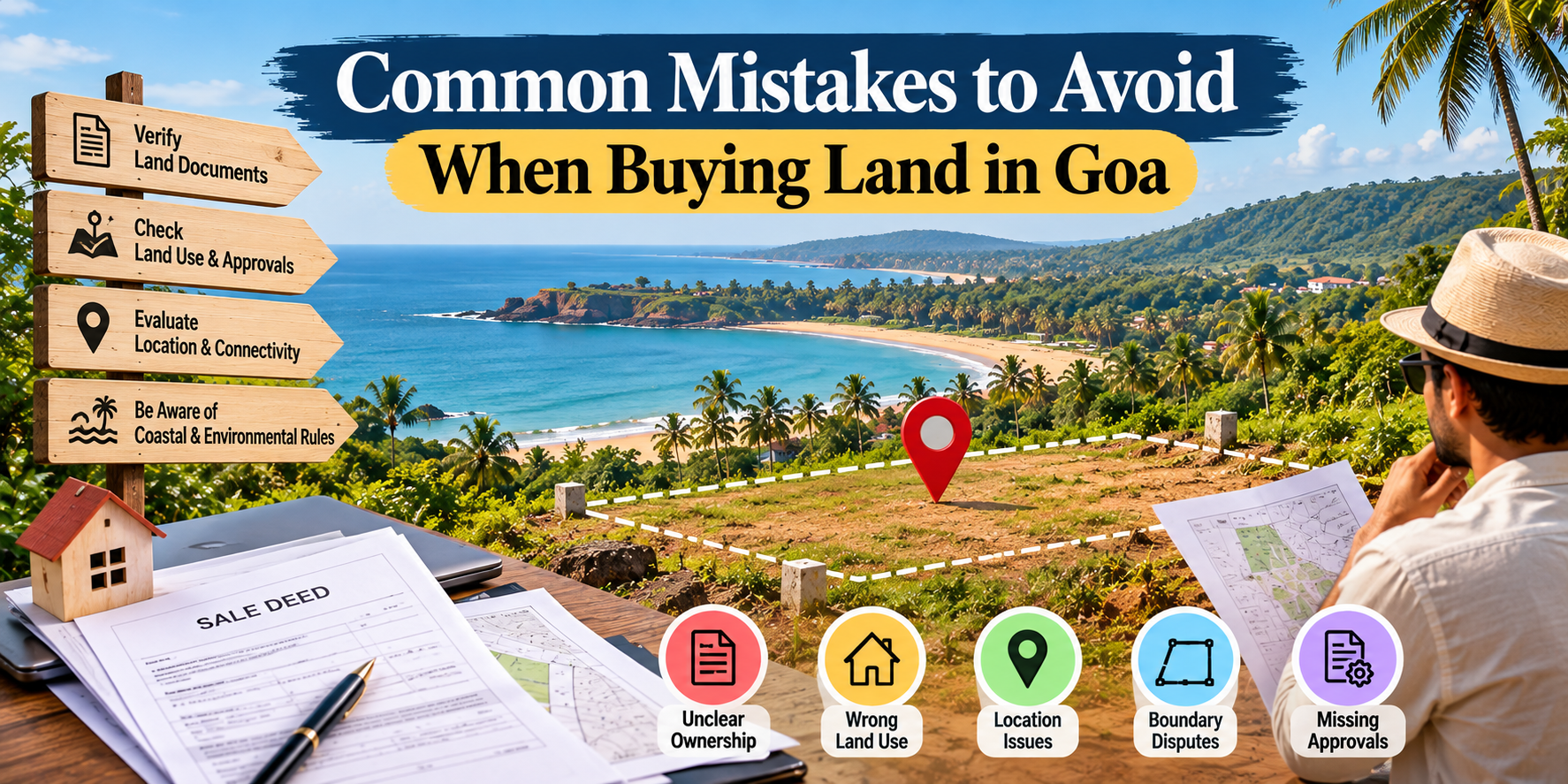

Common Mistakes to Avoid When Buying Land in Goa

Buying land in Goa sounds like a dream for many people. Some imagine building a beautiful holiday home surrounded by greenery, while others see it as an opportunity to invest in a property that they can hold for years. With its beaches, peaceful villages, pleasant surroundings, and growing interest in real estate, Goa continues to attract buyers from different parts of India.

However, buying land is a major financial decision, and excitement can sometimes make people overlook important details.

A plot may look perfect during a site visit, the price may seem attractive, and the seller may promise that the area will develop soon. But what happens if the ownership documents are unclear, the land cannot legally be used for construction, or the actual plot does not match what was shown?

These are situations that can create unnecessary stress and financial problems.

If you are exploring plots in Goa, understanding the common mistakes buyers make can help you approach the purchase more carefully. Whether you are buying land for a future home, a holiday property, or long-term investment, knowing what to check before making a payment is extremely important.

Let’s look at some common mistakes you should avoid when buying land in Goa.

1. Not Verifying the Land Ownership Documents

One of the biggest mistakes buyers make is trusting the seller without properly checking the ownership documents.

Before purchasing any land, you must establish whether the seller has a clear legal right to sell it. A property may have an attractive location and a reasonable price, but unclear ownership can create serious complications later.

In Goa, land records and ownership history deserve particular attention. Some properties may have complicated inheritance arrangements, multiple legal heirs, old ownership records, or pending disputes.

Before proceeding, ask for relevant documents, which may include:

  • Registered sale deed or other title documents.
  • Previous ownership records and title chain.
  • Form I and XIV, where applicable.
  • Mutation records.
  • Survey records and property identification details.
  • Encumbrance-related records.
  • Details of any pending litigation or claims.

The documents required will depend on the type and history of the property.

It is always advisable to get the complete title examined by an independent property lawyer familiar with Goa’s land laws.

Never assume that a person has the right to sell a property simply because they are in possession of the land.

2. Assuming Every Plot Can Be Used for Construction

This is another mistake that can become expensive.

Not every plot available for sale in Goa can automatically be used for constructing a residential house, villa, or commercial property.

Land may have different classifications and permitted uses. Some parcels may be agricultural, while others may fall under settlement zones or other categories under the applicable planning framework.

If your intention is to build a house, you must first understand whether the land legally permits your proposed use.

Before buying, check:

  • The current land classification.
  • Applicable zoning under the relevant Regional Plan or planning documents.
  • Whether the intended construction is permitted.
  • Whether land conversion or other approvals are required.
  • Applicable restrictions under local planning and environmental regulations.

Do not depend only on the seller’s statement that construction is allowed.

For example, a buyer may purchase agricultural land assuming that a residential villa can be constructed immediately. Later, they may discover that additional permissions or changes in land use are necessary, or that construction is restricted altogether.

The correct approach is to verify the legal position before making a financial commitment.

3. Ignoring the Location and Surrounding Area

A beautiful plot does not always mean a suitable property.

Some buyers focus entirely on the land price and forget to examine the surrounding neighbourhood. This can affect their experience whether they intend to build a home, use the property as a holiday retreat, or hold it as an investment.

Goa has different types of locations, each offering a different lifestyle.

North Goa is often considered by buyers who prefer access to popular beaches, restaurants, cafés, and social activities. South Goa may appeal to those looking for a comparatively quieter environment and relaxed surroundings.

However, the experience can vary significantly from one village or neighbourhood to another.

Before choosing a location, consider:

  • Distance from the nearest main road.
  • Availability of grocery stores and daily necessities.
  • Access to hospitals and other essential services.
  • Nearby schools, if you plan to live there with your family.
  • Traffic and noise levels.
  • Surrounding development and vacant land.
  • Road conditions during the monsoon.

Visit the location personally and spend enough time understanding the area.

A plot that looks attractive in photographs may feel very different when you visit it.

4. Not Checking the Survey Boundaries and Actual Plot Size

Another common mistake is assuming that the land area mentioned in an advertisement or discussed verbally is accurate.

Before buying plots in Goa, make sure the actual property boundaries and measurements match the available records and the proposed transaction.

A mismatch in survey details, boundaries, or area can create disputes between neighbouring owners or complications during registration and future development.

Ask for the relevant survey plan and have the property inspected by a qualified surveyor where necessary.

Pay attention to:

  • Survey number and subdivision details.
  • Actual plot dimensions.
  • Physical boundary markings.
  • Access to the property.
  • Any overlap with neighbouring land.
  • Differences between recorded and claimed measurements.

Do not finalise the purchase until you are satisfied that the land being offered is the same land described in the documents.

5. Overlooking Road Access and Right of Way

A plot may be located in a beautiful area, but if there is no legally established access to it, owning that land can become difficult.

Some buyers discover access-related problems only after purchasing the property.

For example, a seller may show a pathway that people have been using for years. However, that does not automatically mean the buyer has a legally enforceable right to use it.

Before purchasing, check whether the plot has proper legal access through a public road or a validly established right of way.

Also examine:

  • Whether the approach road exists on the ground.
  • Whether the access is reflected in relevant records, where applicable.
  • Whether any easement or right-of-way arrangement is documented.
  • Whether the road is wide enough for your intended use.
  • Whether access remains available throughout the year.

This is particularly important if you plan to construct a house or transport building materials to the property.

A clear access arrangement should be verified before you proceed.

6. Buying Land Without Understanding Its Total Cost

Many buyers calculate their budget based only on the advertised land price.

However, the actual cost of purchasing land can be higher once additional expenses are included.

Depending on the transaction, you may need to account for:

  • Stamp duty and registration charges.
  • Legal consultation and title verification fees.
  • Survey and measurement expenses.
  • Applicable taxes and other statutory charges.
  • Land conversion or approval-related expenses, where required.
  • Brokerage or transaction charges, if applicable.
  • Boundary wall and fencing costs.
  • Future construction and maintenance expenses.

Ask the seller for a clear written breakdown of the amount payable.

You should also keep a financial buffer for unexpected expenses.

Planning the total budget in advance can help you avoid financial pressure after the purchase.

7. Believing Every Promise About Future Appreciation

Goa’s popularity as a holiday destination has attracted interest from property buyers. However, this does not mean that every plot will automatically increase in value.

One common mistake is purchasing land only because someone promises that prices will double in a short period.

Property appreciation depends on several factors, including location, legal status, connectivity, infrastructure, local demand, and the overall real estate market.

Before making an investment decision, ask yourself:

  • Is the current price reasonable compared with similar properties?
  • Is there actual infrastructure in the area?
  • Are the ownership and land-use documents clear?
  • Is there demand for properties in that location?
  • Can you hold the land for several years if required?
  • How easily could you sell the property in the future?

Avoid making decisions based on guaranteed-return claims.

Land can be a long-term asset, but it also involves risks, holding costs, and resale uncertainty.

A sensible purchase should make financial sense even without assuming unrealistic future appreciation.

8. Not Checking Environmental and Planning Restrictions

Goa is known for its natural surroundings, coastline, rivers, greenery, and environmentally sensitive areas.

Because of this, buyers should pay close attention to applicable environmental and planning restrictions.

Depending on the location, certain plots may be affected by regulations relating to coastal areas, wetlands, forests, no-development zones, or other protected areas.

For example, land falling within a regulated coastal zone may have restrictions on construction and development.

Before buying, check whether the property is affected by:

  • Coastal Regulation Zone (CRZ) restrictions, where applicable.
  • Wetland-related restrictions.
  • Forest or protected-area regulations.
  • Applicable environmental clearances.
  • Local planning and development regulations.

These restrictions can significantly affect what you are legally allowed to do with the property.

If you are considering land close to beaches, rivers, or environmentally sensitive locations, independent legal and technical verification becomes even more important.

9. Trusting Only Photographs and Online Listings

Online property listings are useful for discovering available options. They help buyers compare locations, prices, plot sizes, and other basic details.

However, photographs cannot establish legal ownership, confirm land classification, or prove that a property is suitable for construction.

Sometimes, photographs may show a nearby road, open space, or development that is not actually part of the property being sold.

Before booking any plot:

  • Visit the exact property.
  • Match the location with the survey details.
  • Check the actual road access.
  • Confirm the dimensions and boundaries.
  • Examine the surrounding development.
  • Verify the seller’s claims independently.

If you are unable to visit immediately, request a detailed video walkthrough and copies of the relevant documents. Still, do not treat a virtual visit as a substitute for proper physical and legal verification.

10. Signing the Agreement Without Reading It Properly

The final paperwork is just as important as the property itself.

Some buyers are so focused on completing the purchase that they sign agreements without carefully reading the terms.

This can create problems later, especially if there are differences between what was promised and what is actually mentioned in the agreement.

Before signing, carefully review:

  • Exact property description and survey details.
  • Total purchase price.
  • Payment schedule.
  • Registration and transfer conditions.
  • Possession terms.
  • Refund and cancellation clauses.
  • Seller’s obligations.
  • Any representations regarding approvals or land use.
  • Pending dues or other liabilities.

If the seller has made important promises about road access, utilities, approvals, or development, make sure these are properly documented where legally appropriate.

An independent lawyer should review the agreement before you sign or make a substantial payment.

11. Rushing Into a Purchase Because of Limited-Time Offers

Real estate sellers sometimes promote limited-period discounts or claim that only a few plots are left.

While genuine opportunities may exist, buyers should not allow sales pressure to replace proper research.

Buying land is a major financial decision. A few days spent verifying documents and inspecting the property are far better than spending years dealing with an avoidable dispute.

Take enough time to compare different properties, understand the legal position, and negotiate the terms.

If a seller is unwilling to provide relevant documents or discourages independent verification, treat that as a reason to be cautious.

A genuine property opportunity should be able to withstand reasonable questions.

Checklist Before Buying Land in Goa

Before finalising your purchase, go through this quick checklist:

  • Verify the complete ownership and title history.
  • Check Form I and XIV and other relevant land records.
  • Confirm the land classification and permitted use.
  • Examine applicable zoning and planning restrictions.
  • Verify the survey number, boundaries, and plot dimensions.
  • Confirm legal road access and right of way.
  • Check environmental and coastal restrictions, where applicable.
  • Visit the actual property.
  • Calculate the total purchase cost.
  • Review the sale agreement with an independent lawyer.

Completing these checks can help you understand the property better before committing your money.

Frequently Asked Questions (FAQs)

1. What should I check before buying land in Goa?

You should check ownership documents, title history, Form I and XIV, survey records, land classification, zoning, construction permissions, road access, environmental restrictions, and the total purchase cost.

2. Is it safe to buy plots in Goa?

Buying land in Goa can be a reasonable decision when the property has clear ownership, appropriate land-use status, legally established access, and properly verified documentation. Independent legal verification is strongly recommended.

3. Can I build a house on agricultural land in Goa?

Not automatically. Construction depends on the applicable land-use rules, planning regulations, and permissions. You should verify whether conversion or other approvals are required before purchasing.

4. What is Form I and XIV in Goa?

Form I and XIV is an important land record used in Goa’s revenue administration. It contains details relating to land and its occupants or cultivators. However, it should not be treated as conclusive proof of ownership. A complete title examination is necessary.

5. Should I visit a plot before purchasing it?

Yes. A physical visit helps you check the actual location, boundaries, road access, surrounding development, and ground conditions. It also allows you to compare the property with the information provided by the seller.

6. What are the risks of buying land near beaches in Goa?

Land near beaches may be subject to Coastal Regulation Zone restrictions and other planning or environmental regulations. Always verify the applicable restrictions and permitted development before purchasing.

7. Can land in Goa be a good long-term investment?

It may suit buyers who have a long-term holding plan and select a property after careful legal and financial evaluation. However, appreciation and resale are not guaranteed, and market conditions can change.

Conclusion

Buying land in Goa can be an exciting step, whether you are planning to build a holiday home, create a peaceful personal space, or explore a long-term real estate opportunity.

But the most important part of the purchase is not how beautiful the location looks or how attractive the price sounds. It is understanding exactly what you are buying.

From ownership documents and land classification to survey boundaries, road access, environmental restrictions, and the final agreement, every detail deserves attention.

When exploring plots in Goa, avoid rushing into a decision based on photographs, verbal promises, or expectations of quick appreciation. Take time to inspect the property, compare available options, and get the documents independently verified.

A carefully selected plot can give you greater confidence in your property decision and help you plan your future with fewer uncertainties.

At GoaPlot.in, you can explore Goa property opportunities and learn more about locations and land options before taking your next step.

The right property decision begins with the right information. Do your research, ask questions, and make your purchase with confidence.

Luxury Villa Plots in Goa: Building Your Second Home Lifestyle

There’s a particular kind of appeal that Luxury Villa Plots in Goa hold for buyers across India, the promise of sun, sea breeze, and a genuinely different pace of life, all within a property you’ve shaped exactly to your own taste. But between that appealing idea and actually owning a villa you love lies a series of real decisions, about location, lifestyle fit, and what “luxury” genuinely means for your specific situation.

Why Buyers Are Drawn to Plots Over Ready Villas

Buying a plot rather than a finished Luxury Villas in Goa property gives you something a ready home simply can’t, complete control over design, layout, and finishing, built around how you specifically want to live, not a developer’s general assumptions about what buyers want.

This appeals strongly to buyers with a clear vision, a particular architectural style, specific room requirements, outdoor space designed exactly around how they entertain or relax. It also often means a lower entry cost than an equivalent finished villa, since you’re not paying for construction and interiors upfront.

What “Lifestyle” Actually Means in This Context

The word gets used often in property marketing, but it’s worth unpacking what it genuinely refers to when people talk about a Goa Lifestyle purchase.

A Genuine Pace Shift

Goa offers a noticeably slower, more relaxed daily rhythm compared to most major Indian cities, less traffic stress, more outdoor time, a different relationship with time itself. For buyers genuinely seeking this shift, even part-time, this is often the biggest, most meaningful draw.

Access to Nature and the Coast

Beaches, greenery, a genuine connection to the outdoors, this is central to what most buyers picture when considering Goa specifically, rather than a generic second home anywhere else.

A Social and Cultural Identity

Goa carries its own distinct culture, cuisine, and social rhythm, different from the rest of India in ways that genuinely appeal to buyers looking for something beyond just a change of scenery.

What Makes a Plot Genuinely “Luxury”

Not every plot marketed as premium actually delivers on that promise. A few factors genuinely separate a true luxury opportunity from one that’s simply priced at a premium.

Location Within Goa

Proximity to the coast, to established or up-and-coming areas, and to genuine natural beauty matters significantly. A premium price without a genuinely desirable location is just an expensive plot, not necessarily a luxury one.

Size and Privacy

Larger plots that offer genuine space and separation from neighbouring properties deliver a different experience than smaller, tightly packed luxury developments, even at similar price points.

Views and Natural Features

Elevation, existing tree cover, proximity to water, these natural assets genuinely enhance a plot’s long-term value and daily enjoyment in ways that can’t be easily replicated through construction alone.

Infrastructure and Access

Even a beautifully located plot loses its appeal if reaching it is genuinely difficult, or if basic infrastructure, water, power, road access, isn’t reliably in place.

Building Your Second Home: What to Think Through

Design for How You’ll Actually Use It

Will this be a frequent weekend retreat, an occasional holiday home, or eventually a full-time residence? Your answer should genuinely shape the design, from room count to how much low-maintenance landscaping makes sense versus an elaborate garden you’ll rarely be around to tend.

Factor in Realistic Construction Timelines

Building a genuinely custom home takes time, often longer than initial estimates suggest. Budget both time and money with reasonable buffer, rather than assuming everything will proceed exactly on the fastest possible schedule.

Think About Maintenance From the Start

A Second Home that sits empty for stretches between visits needs a maintenance plan, whether that’s a local caretaker, a property management service, or a trusted local contact who can check on things regularly.

Consider Rental Potential, Even If It’s Not Your Primary Goal

Even buyers primarily focused on personal use often find value in occasionally renting out their property when not using it themselves. Designing with at least some flexibility for this, good photos-worthy spaces, reasonable guest amenities, keeps this option open even if you don’t plan to rely on it heavily.

What to Check Before Committing to a Plot

Confirm Clear Land Title

This remains the single most important verification step, regardless of how premium or well-marketed a plot appears. Get the complete ownership history and verify there are no disputes or unclear claims.

Understand Land Classification and Construction Permissions

Confirm exactly what can be built, and whether any coastal zone or other regulations apply to the specific location you’re considering.

Visit During Different Seasons

A plot that looks stunning during a dry winter visit can reveal drainage or access issues during the monsoon. If at all possible, see the area during both seasons before committing.

Verify Legal Access

Confirm the plot has clear, documented, legal access via a public road, not an informal arrangement that could become complicated later.

Frequently Asked Questions

Q: Is buying a plot genuinely cheaper than buying a ready-built luxury villa?
Usually yes, upfront, since you’re not paying for construction and interiors immediately. However, factor in realistic building costs separately, the total investment over time can end up comparable depending on your design choices and finishing quality.

Q: How long does it typically take to build a custom luxury villa in Goa?
This varies significantly based on design complexity, approvals, and the monsoon season’s impact on construction timelines. It’s wise to budget more time than initial estimates suggest, and plan around seasonal construction limitations.

Q: Can I get a loan against a plot purchase, or only for a finished home?
This depends on your bank and the specific land classification. Some lenders offer plot loans, though terms often differ from standard home loans. It’s worth discussing this directly with your financial institution before assuming either way.

Q: Do luxury villa plots in Goa come with any shared amenities?
This varies by project. Some are part of larger gated developments offering shared security and amenities, while others are standalone plots with no shared infrastructure. Confirm this specifically for any plot you’re considering.

Q: Is rental income realistic for a custom-built villa, or only for established projects?
A well-designed, well-located custom villa can absolutely perform well as a rental, provided it includes amenities guests genuinely expect, like reliable AC, Wi-Fi, and ideally a pool, and sits reasonably close to popular areas.

Q: What’s the biggest mistake buyers make when purchasing villa plots in Goa?
Rushing the land title and documentation verification, often because of excitement about the location or design possibilities. This step deserves just as much scrutiny as the lifestyle and design decisions that tend to get more attention.

Final Thoughts

Luxury villa plots in Goa offer a genuine opportunity to build a second home exactly suited to how you want to live, but that opportunity depends heavily on choosing the right location, verifying documentation properly, and planning realistically for both construction and ongoing maintenance. The lifestyle appeal is real, but it’s built on getting these practical foundations right first.

If you’re exploring Luxury Villa Plots in Goa and want guidance through location selection, documentation, and the overall buying process, it helps to speak with an experienced team. Explore current options through goaplot.in, and take the time to find a plot that genuinely matches the lifestyle you’re picturing.

Luxury Villas in Goa

Goa has a special charm that makes people fall in love with it. For some, it is the sound of the waves, beautiful beaches, and relaxed lifestyle. For others, it is the Portuguese-style architecture, green surroundings, and peaceful atmosphere that make Goa feel different from any other destination in India. Over the years, Goa has also become an attractive place for people looking to own a second home or invest in property.

Among the different property options available, luxury villas in Goa have become a popular choice for buyers who want privacy, comfort, and a lifestyle that feels far removed from the rush of city life.

Whether you are planning to purchase a holiday home, relocate to Goa, or explore real estate investment opportunities, buying a luxury villa can be an important decision. However, finding the right property requires more than simply choosing a beautiful house. Location, legal documentation, construction quality, maintenance, and long-term suitability all deserve careful attention.

In this guide, we will explore what makes luxury villas in Goa appealing, which factors to consider before buying, and how to approach your property search with confidence.

Why Are Luxury Villas in Goa Becoming Popular?

The idea of owning a home in Goa appeals to people for different reasons. Some buyers want a peaceful place to spend their holidays, while others are looking for a second home where they can stay for longer periods.

A villa offers a different experience compared with a conventional apartment. Depending on the property, buyers may enjoy private outdoor spaces, gardens, terraces, spacious interiors, and greater independence in how they use their homes.

For families living in busy cities such as Mumbai, Delhi, Bengaluru, or Gurgaon, a villa in Goa can provide a welcome change of pace. Instead of dealing with crowded neighbourhoods and a demanding daily routine, owners can enjoy a more relaxed environment whenever they visit.

Another reason behind the interest in luxury villas in Goa is the variety of locations available. Buyers can explore areas closer to popular beaches, established residential neighbourhoods, quieter villages, or locations with convenient access to everyday facilities.

The right choice depends on how you plan to use the property and what matters most to you.

1. Choose the Right Location for Your Lifestyle

Location is one of the most important factors when buying a luxury villa. A property may look impressive, but its surroundings will influence your everyday experience and the convenience of reaching essential destinations.

Goa offers different living environments, and buyers should understand these differences before making a decision.

North Goa

North Goa attracts buyers who enjoy an active social environment, restaurants, cafés, shopping options, and access to popular beaches. Areas around Assagao, Anjuna, Siolim, and nearby villages may appeal to people who want a combination of residential living and access to Goa’s social scene.

However, individual neighbourhoods can differ considerably. Some locations experience more tourist activity, while others offer a quieter residential atmosphere.

Before choosing a villa in North Goa, consider road access, nearby construction, traffic conditions, and the character of the surrounding neighbourhood.

South Goa

South Goa may appeal to buyers who prefer a comparatively quieter atmosphere and a more relaxed residential setting. Depending on the location, buyers can explore properties with access to beaches, green surroundings, and local communities.

It is still important to visit the specific neighbourhood rather than relying only on the general reputation of the region.

Which Location Should You Choose?

There is no single location that suits every buyer. If you plan to use your villa frequently for holidays and social activities, proximity to your preferred destinations may be important. If you want a long-term residence, everyday convenience, healthcare access, road connectivity, and neighbourhood conditions may deserve greater attention.

The best luxury villa is not necessarily the one in the most famous location. It is the one that fits your lifestyle, budget, and long-term plans.

2. Understand What Makes a Villa Truly Luxurious

The word “luxury” can mean different things to different buyers. For one person, it may mean a large garden and private swimming pool. For another, it may mean elegant interiors, thoughtful architecture, and a peaceful location.

Before comparing properties, make a list of the features that genuinely matter to you.

Some features buyers may consider include:

  • Spacious bedrooms and comfortable living areas.
  • Well-planned kitchens and bathrooms.
  • Private outdoor spaces or landscaped gardens.
  • Terraces, balconies, or open seating areas.
  • A swimming pool, where available.
  • Good natural light and ventilation.
  • Convenient parking and access roads.
  • Quality construction and durable materials.
  • Suitable security and maintenance arrangements.

Not every villa will offer all these features, and their presence does not automatically make a property a good purchase.

Pay attention to how the home is designed and how practical it will be to maintain. A large property may look impressive during a visit, but its cleaning, upkeep, landscaping, and utility costs can become significant over time.

A well-designed villa should offer comfort and functionality alongside visual appeal.

3. Decide Whether You Want a Holiday Home or a Permanent Residence

Before searching for luxury villas in Goa, think about how often you expect to use the property.

If you want a holiday home, you may prioritise proximity to beaches, restaurants, leisure activities, and destinations you enjoy visiting. You may also prefer a property that can be secured and maintained easily when you are away.

If you plan to live in Goa throughout the year, your priorities could be different. You may need convenient access to grocery stores, healthcare facilities, schools, workplaces, and other everyday services.

For a permanent residence, it is also worth visiting the area during different times of the day. Observe traffic, noise levels, access roads, and the general atmosphere of the neighbourhood.

A property that feels perfect during a short holiday may not necessarily suit your everyday routine. Thinking about your intended use early can help you narrow down the right options.

4. Consider the Long-Term Investment Perspective

Some buyers explore villas in Goa primarily for personal use, while others also consider their long-term investment potential.

Goa’s popularity as a travel destination has encouraged interest in different forms of property ownership. However, this does not mean every villa will appreciate in value or generate rental income.

Property performance depends on several factors, including location, purchase price, legal status, maintenance, market demand, and the condition of the property.

If investment is one of your objectives, avoid making a decision based only on claims about future price appreciation.

Instead, consider the following questions:

  • Is the asking price reasonable compared with similar properties in the area?
  • Is the location suitable for the type of buyer or tenant you want to attract?
  • What annual maintenance expenses should you expect?
  • Are there any restrictions on the intended use of the property?
  • How easily could you sell the property if your plans change?
  • Can you comfortably hold the property if the market takes longer than expected to improve?

It is also important to separate personal enjoyment from financial returns. A villa may be an excellent holiday home even if its rental income is limited. Similarly, a property that looks attractive as an investment may not suit your family’s lifestyle.

Evaluate both aspects independently before deciding.

5. Understand the Costs Beyond the Purchase Price

One mistake buyers sometimes make is focusing entirely on the listed property price.

Owning a luxury villa involves several additional expenses, and these should be included in your budget from the beginning.

Depending on the property and transaction, additional costs may include stamp duty, registration charges, legal assistance, taxes where applicable, furnishing, repairs, and utility connections.

Once you own the villa, recurring expenses may include electricity, water, housekeeping, garden maintenance, swimming pool upkeep, security, and general repairs.

Properties that remain unoccupied for long periods may also need regular inspections and preventive maintenance.

Before finalising your budget, ask for a clear explanation of the costs associated with the purchase and the ongoing expenses of ownership.

It is sensible to maintain a financial buffer for unexpected repairs or maintenance requirements. This can help prevent a property purchase from becoming a financial burden later.

6. Check the Legal Documents Before Buying

Legal verification is one of the most important stages of buying property in Goa. Beautiful interiors and attractive surroundings should never replace proper checks of the property’s ownership and approvals.

Before committing to a purchase, engage an independent property lawyer familiar with the applicable laws and local documentation requirements.

Depending on the property, your lawyer may need to examine:

  • The title documents and ownership history.
  • Relevant land and revenue records.
  • Encumbrances, mortgages, or potential disputes.
  • Applicable planning permissions and construction approvals.
  • Approved building plans, where relevant.
  • Land-use status and permitted development.
  • Access rights and any relevant easements.
  • Outstanding dues or other legal obligations.

The exact documents required will depend on the type of property, its location, and how it was developed.

Do not assume that a property is legally sound simply because it is being marketed as a luxury villa or is located within a well-known development.

If you are purchasing a newly constructed villa, understand the approvals relevant to the project. For a resale property, review the ownership history and any alterations made after construction.

Never rely solely on verbal assurances. Have the relevant documents independently verified before making a financial commitment.

7. Visit the Property Before Making a Decision

Photographs and videos can help you shortlist villas, but they cannot tell you everything about a property.

Whenever possible, visit the villa in person before making a final decision.

Look beyond the interiors and examine the surrounding area. Check the condition of the approach road, drainage, water availability, electricity supply, mobile network coverage, and access to essential services.

Inspect the building for visible signs of dampness, water leakage, cracks, or poor maintenance. If the property has been vacant for some time, ask whether it has been regularly inspected and maintained.

Go through the practical details as well. Is there enough parking? Is the outdoor space easy to maintain? Are neighbouring properties occupied? Is there ongoing construction nearby?

If you cannot visit immediately, arrange a detailed video walkthrough and request the relevant documentation. However, remote viewing should not replace independent verification.

A careful inspection can help you identify concerns before they become expensive problems.

8. Can a Luxury Villa in Goa Generate Rental Income?

Some buyers consider renting out their villas when they are not using them. Depending on the location, property features, local demand, and applicable rules, holiday rentals may be an option.

However, rental income should never be treated as guaranteed.

Demand can vary throughout the year, and a property may experience periods with fewer bookings. Expenses such as cleaning, maintenance, repairs, management fees, and utilities can reduce the amount you actually earn.

Before purchasing a villa for rental purposes, research comparable accommodation in the same area. Consider the likely occupancy rate, seasonal pricing, competition, and costs involved in managing guest stays.

You should also verify the applicable permissions, registration requirements, and local rules governing the intended rental activity.

If you live outside Goa, consider who will manage bookings, guest communication, cleaning, emergencies, and maintenance when you are away.

Prepare a realistic financial estimate rather than relying on the highest possible rental figures.

For buyers who mainly want a personal holiday home, occasional rental income may be an additional benefit. For those purchasing primarily for financial returns, the numbers deserve much closer scrutiny.

9. How to Find the Right Luxury Villa in Goa

Searching for the right property becomes easier when you know what you want before beginning the process.

Start by deciding your total budget, preferred location, required space, and intended use. Identify which features are essential and which ones you can compromise on.

Next, compare available properties using consistent criteria. Consider location, construction quality, legal documentation, maintenance requirements, and the overall cost of ownership rather than focusing only on appearance.

You can explore property options and location-related information through goaplot.in.

Once you have shortlisted suitable properties, arrange visits, ask detailed questions, and have the relevant documents checked independently.

Take your time. Buying a luxury villa is a significant financial commitment, and there is rarely a good reason to rush into a decision before understanding the property properly.

Common Mistakes to Avoid When Buying a Villa in Goa

Even experienced buyers can overlook important details when they find a property they really like.

Here are a few mistakes worth avoiding:

Choosing a property based only on photographs: Attractive images may not reveal construction issues, neighbourhood conditions, or access problems.

Ignoring legal verification: Ownership, approvals, land-use status, and other relevant documents should be checked before proceeding.

Underestimating maintenance expenses: Gardens, pools, large interiors, and outdoor spaces may require regular care.

Assuming rental income is guaranteed: Occupancy and rental rates can change with the season and market conditions.

Buying in the wrong location: A villa may be beautiful but inconvenient for your intended lifestyle.

Stretching the budget too far: The purchase should leave enough room for recurring expenses and unexpected costs.

Avoiding these mistakes will help you approach your property search with greater clarity and make a decision based on practical considerations rather than excitement alone.

Final Thoughts

Buying a luxury villa in Goa is about more than owning an attractive property. It is about choosing a place that fits the way you want to live, spend your holidays, and plan for the future.

For some people, the ideal villa is a peaceful retreat surrounded by greenery. For others, it is a spacious family home close to their favourite places in Goa. Some buyers may also explore rental opportunities, while others simply want a private space to enjoy with family and friends.

Whatever your reason, take time to understand the location, compare properties, calculate the full cost of ownership, and verify the legal documents carefully.

The right villa should make sense not only when you first see it, but also when you consider the responsibilities and expenses that come with owning it.

With clear priorities and careful research, you can make a more informed decision when exploring luxury villas in Goa and find a property that genuinely suits your needs.

Is North Goa or South Goa Actually Right for You?

Here’s a question worth sitting with before you fall in love with either side: are you drawn to North Goa because it genuinely fits how you want to live, or because it’s simply the side everyone talks about first? Same question for South Goa, is the appeal of a quieter, calmer atmosphere something you actually want day to day, or does it just sound more peaceful in theory than it would feel in practice for you specifically?

This isn’t a simple geography question. North and South Goa offer genuinely different lifestyles, and picking the wrong one for your own temperament can leave you with a beautiful property you don’t quite enjoy as much as you expected.

Why This Decision Gets Rushed So Often

Most first-time Goa buyers hear about North Goa first, it’s louder, more marketed, more frequently covered in travel content and social media. South Goa often gets positioned as the “quieter alternative,” almost as an afterthought rather than a genuine, equally valid choice in its own right.

This creates a bias where buyers default toward North Goa simply because it’s more visible, without seriously asking whether its particular energy, busier beaches, more nightlife, higher property density, actually suits how they personally want to use their property.

What North Goa Genuinely Offers

North Goa is the livelier, more established half of the state, known for its beaches, markets, restaurants, and a steady, year-round stream of both domestic and international visitors.

Strong Rental and Resale Demand

If Goa property investment with rental income in mind is your priority, North Goa generally offers stronger, more consistent demand. Areas like Candolim, Anjuna, and Assagao attract reliable tourist footfall, which translates into more predictable occupancy if you’re renting out your property.

More Established Infrastructure

Roads, markets, hospitals, and general amenities tend to be more developed here, simply because North Goa has been a tourist hub for much longer. This matters if convenience and immediate access to services are priorities for you.

A Livelier, More Social Atmosphere

Cafes, nightlife, a constant stream of activity, North Goa suits buyers who enjoy being part of an energetic, social environment rather than a quiet retreat.

What South Goa Genuinely Offers

South Goa has a calmer, more spread-out feel, with longer, less commercial beaches and a noticeably slower pace of life.

Genuine Peace and Quiet

If your main reason for wanting a villa in Goa is to escape busyness, not find a different version of it, South Goa’s quieter character often delivers on that promise more reliably than North Goa’s livelier beach belts.

Relatively Better Value

Property prices in South Goa are often more accessible than in North Goa’s most established, high-demand pockets, offering a chance to get more space or a better location for a similar budget.

A Slower, More Personal Pace

Fewer crowds, longer stretches of uninterrupted beach, a more relaxed daily rhythm, South Goa suits buyers who want their property to feel like a genuine personal retreat rather than being surrounded by constant tourist activity.

Questions Worth Asking Yourself Honestly

Do You Actually Enjoy Busy, Social Environments, or Do They Wear You Out?

Be honest about your own temperament here, not how you imagine yourself on an ideal holiday, but how you actually feel after a few days in a lively, crowded environment. Does it energise you, or does it eventually start to feel like exactly what you were trying to escape?

Is Rental Income a Real Priority, or Secondary to Personal Enjoyment?

If generating consistent rental income matters significantly to your decision, North Goa’s stronger, more established demand generally makes it the more practical choice. If personal enjoyment leads and rental income is a nice bonus, South Goa’s quieter appeal might matter more.

How Important Is Immediate Access to Amenities?

If you want restaurants, markets, and conveniences within easy reach without much planning, North Goa’s more developed infrastructure serves this better. If you’re comfortable with a bit more self-sufficiency and don’t mind driving a little further for certain things, South Goa’s trade-off becomes less significant.

Have You Actually Spent Time in Both, or Mostly Just One?

A lot of buyers form strong opinions about North versus South Goa based on limited, often one-sided exposure, maybe several trips to North Goa and only a single, brief visit south, or vice versa. A genuinely informed decision benefits from spending real, unstructured time in both areas before committing to either.

Does Your Family Share Your Preference, or Lean Differently?

If you’re buying with family, it’s worth checking whether everyone’s instinct points the same direction. One person’s dream of a lively, social North Goa property might clash with another’s hope for a completely quiet retreat, worth surfacing honestly before the purchase, not after.

A Simple Comparison

FactorNorth GoaSouth Goa
AtmosphereLively, social, busierCalm, quieter, more spread out
Rental demandGenerally strongerModerate, steadier
Property pricesOften higherRelatively more accessible
InfrastructureMore developedDeveloping steadily
Best suited forRental-focused buyers, social lifestylePersonal retreat, value-focused buyers

Signs North Goa Genuinely Suits You

  • You enjoy being around activity, cafes, markets, a social buzz, rather than finding it draining
  • Rental income and consistent demand are genuine priorities in your decision
  • You want immediate, convenient access to restaurants and amenities without much planning
  • You’ve spent real time in North Goa and your enthusiasm has held up beyond a single holiday visit

Signs South Goa Genuinely Suits You

  • Quiet and personal space are what you’re actually seeking, not a different flavour of busy
  • Relative value and getting more for your budget matters significantly to you
  • You’re comfortable with a bit more self-sufficiency in exchange for a calmer environment
  • You’ve spent time in South Goa specifically, not just assumed it would suit you based on its reputation as “the quiet one”

What to Do If You’re Still Genuinely Torn

Spend Real Time in Both, Deliberately

Rather than a quick comparison visit to each, spend several unstructured days in both North and South Goa, ideally staying somewhere in each area rather than just passing through, to get a genuine feel for daily life in both.

Separate the Reputation From Your Actual Experience

North Goa’s reputation as “exciting” and South Goa’s as “peaceful” are generalisations. Your own experience in each specific area matters more than the broader label everyone uses.

Consider a Hybrid Approach If You’re Genuinely Split

Some buyers resolve this by choosing a quieter pocket within North Goa, or a slightly more developed area within South Goa, finding a middle ground rather than committing fully to either extreme.

Final Thoughts

North and South Goa aren’t simply two versions of the same decision, they genuinely suit different temperaments, different priorities, and different visions of what property ownership in Goa should actually feel like. The right choice isn’t about which side has the better reputation, it’s about which one actually matches how you want to spend your time there.

If you’re genuinely unsure which side fits you better, it helps to speak with an experienced team like Goa Plot, who can walk you through specific areas in both North and South Goa based on your actual priorities, rather than general assumptions about either side.

Why Buying Luxury Villa Plots in Goa is the Ultimate Second Home Strategy

For decades, the Indian real estate playbook for high-net-worth individuals and NCR investors focused heavily on acquiring commercial desk space or residential high-rise apartments in urban centers. While these assets served their purpose for traditional wealth accumulation, modern investors have significantly shifted their priorities. Today, owning a property is no longer just about acquiring physical square footage—it is deeply tied to Lifestyle, flexibility, wellness, and long-term capital appreciation.

Among all leisure and vacation destinations in India, Goa consistently leads the chart as the primary choice for acquiring a Second Home. However, the way people invest in Goa has undergone a massive transformation. The era of buying cramped, pre-built apartments in crowded tourist strips is giving way to a far more strategic asset class: Luxury Villa Plots in Goa.

Here is why securing land and building a bespoke villa in coastal India has emerged as the ultimate investment strategy for discerning buyers.

1. Land Ownership: The True Driver of Wealth Creation

When you purchase a built-up apartment or a unit within a multi-story holiday complex, a large portion of your investment goes into the structure itself—an asset that naturally depreciates over time. In contrast, the land beneath the structure appreciates steadily, especially in geographies where clear-title, buildable land is scarce.

Prime land in Goa, particularly across sought-after pockets in North and South Goa, is finite. Strict coastal regulation zone (CRZ) rules, floor space index (FSI) limits, and environmental protection guidelines mean that buildable land parcels are exceptionally limited.

By investing in Luxury Villa Plots in Goa, you secure a physical land bank in a high-demand market. Land ownership gives you full control over the asset, higher long-term capital appreciation, and immunity against the aesthetic and structural aging that affects apartment complexes.

2. High Short-Term Rental Yields and Tourism Capital

Goa is no longer just a seasonal holiday destination; it has evolved into a vibrant, year-round economy. Driven by remote work, wellness tourism, destination weddings, and a booming culinary and cultural scene, domestic and international travel to Goa remains consistently strong.

This high travel demand creates an exceptional Investment Opportunity in Gurgaon investors and NCR capital holders can leverage for passive income:

  • The Villa Advantage: Premium travelers, large families, and corporate groups increasingly prefer private, luxury villas over standard hotel rooms. Features like private swimming pools, landscaped gardens, custom interiors, and dedicated housekeeping command premium nightly tariffs.
  • Passive Cash Flow: When you are not using your Luxury Villas in Goa for personal family retreats, professional villa management companies can handle marketing, guest check-ins, and maintenance, turning your second home into a high-yielding rental asset.

3. Complete Architectural Freedom and Customization

Buying a pre-constructed property often means accepting someone else’s layout, material quality, and design choices. Buying a plot gives you complete creative control to design a home tailored to your family’s exact taste and lifestyle requirements.

Whether you envision a modern Portuguese-influenced estate with high ceilings and courtyard gardens, a minimalist tropical villa with expansive floor-to-ceiling glass, or a fully sustainable eco-villa powered by solar energy, owning land makes it possible. You decide the layout, the quality of finishes, the pool size, and the balance between indoor living and private green spaces.

4. Hedging Between Urban Hustle and Coastal Tranquility

For investors coming from Delhi NCR’s fast-paced corporate environments, a second home in Goa serves as an essential sanctuary for health, balance, and mental well-being.

Many buyers who initially explore local regional options—such as Naugaon Farmhouses or thematic Goa Plots in Gurgaon for quick weekend breaks—eventually pair their local land holdings with a true coastal retreat in Goa. This multi-locational approach gives you the best of both worlds: convenient weekend nature escapes close to NCR, alongside a dedicated tropical sanctuary in Goa for extended stays, holidays, and remote work stints.

5. Seamless Liquidity and High Demand from High-Net-Worth Buyers

Clear-title, gated villa plots in prime Goa locations enjoy exceptional market demand. As more entrepreneurs, corporate executives, NRI investors, and creative professionals seek primary or secondary residences in Goa, well-located land parcels remain one of the most liquid and resale-friendly real estate categories in the country.

Should you decide to monetize your investment in the future, selling a clear-title luxury plot or a custom-built designer villa in a gated community routinely yields significantly higher returns compared to standard residential units.

Key Considerations Before Buying Villa Plots in Goa

While the opportunity is immense, navigating land acquisition in Goa requires diligence, proper verification, and local expertise. Before committing capital, buyers must ensure:

  1. Clear Land Title and Ownership: Verifying historical land records, ownership chain, and encumbrance certificates is critical.
  2. Zoning and Approvals: Ensuring the land falls under settlement zones (Sanad converted) with clear buildability permissions and defined FSI limits.
  3. Infrastructure and Access: Confirming proper road connectivity, electricity supply, water connections, and drainage infrastructure.
  4. Gated Community Benefits: Choosing gated plot developments that offer 24/7 security, property management, and shared luxury amenities simplifies maintenance when you are away.

Partnering With the Right Advisory

Navigating outstation land investments without local insight can expose buyers to unnecessary legal and operational complexity. Partnering with experienced Real Estate Advisors in Gurgaon who specialize in cross-regional land opportunities ensures a transparent, secure, and hassle-free transaction.

If you want to discover handpicked villa plots, stay updated on upcoming project launches, or attend an exclusive real estate Event in Gurgaon, consulting a trusted market leader is the best first step.

To explore pre-vetted land parcels, premium villa plot developments, and high-growth property portfolios tailored to your wealth and lifestyle goals, connect with the team at Darpann Investment Real Estate.

Buying a Plot in Goa: What Every Buyer Should Know

Goa is known for its beautiful beaches, relaxed lifestyle, green surroundings, and welcoming atmosphere. But today, many people are looking at Goa for more than just holidays. They are exploring property options to build a dream home, create a holiday retreat, or make a long-term real estate investment.

Buying a plot in Goa can be an exciting decision. It gives you the freedom to plan a home according to your needs instead of choosing a property that someone else has already built. You can also explore different locations, plot sizes, and budgets before deciding what works best for you.

However, buying land is not as simple as finding an attractive property and paying the asking price. The location, legal documents, land use, road access, and additional expenses all matter.

If you are planning to invest in Goa real estate, this guide will help you understand what to look for before making your decision.

1. Why Are More People Interested in Buying Land in Goa?

For many buyers, Goa offers a combination of lifestyle and investment opportunities. Some want a peaceful place to live, while others want a second home where they can spend holidays with family and friends.

Buying land also gives you more flexibility. Depending on the plot’s legal status and applicable permissions, you may be able to build a home that suits your preferences, from a modern villa to a simple holiday house.

Another reason people consider Goa is its tourism-driven economy. Certain locations attract holidaymakers, businesses, and people looking for second homes. This can create interest in different types of properties.

Still, it is important to understand that not every location offers the same opportunities. A plot near popular attractions may have a very different price and purpose from one in a quieter village.

Instead of buying land simply because Goa is a popular destination, think about what you want from the property and whether the particular location supports that goal.

2. Choose the Right Location Before Looking at Prices

Location is one of the biggest factors to consider when buying a plot in Goa.

North Goa is often considered by buyers who prefer lively surroundings, restaurants, entertainment options, and access to popular tourist areas. South Goa may appeal to people who prefer a quieter environment and a more relaxed pace of life. However, both regions have different neighbourhoods, and the experience can vary considerably from one location to another.

You should also explore areas based on your practical needs.

Ask yourself a few simple questions:

  • How far is the property from the nearest main road?
  • Are shops, hospitals, and other essential services accessible?
  • Is the area suitable for permanent living or occasional holidays?
  • Is public transport available nearby?
  • Does the surrounding neighbourhood match your expectations?
  • Are there any concerns about flooding, drainage, or access during heavy rain?

Visit the location in person if possible. Photographs can make a property look attractive, but they may not show the condition of the approach road, nearby construction, or the actual surroundings.

A good location is not necessarily the most expensive one. It is the one that suits your purpose and offers the facilities you genuinely need.

3. Decide What You Want to Do With the Plot

Before choosing a property, be clear about how you plan to use it.

If you want to build your dream home, focus on residential suitability, access to utilities, neighbourhood conditions, and the permissions required for construction.

If you want a holiday home, consider travel convenience, privacy, maintenance requirements, and access to places you enjoy visiting.

If your main purpose is investment, pay attention to the purchase price, legal status, market demand, and the possibility of selling the property in the future.

Some buyers also consider land for commercial or hospitality-related projects. In such cases, it is especially important to confirm whether the proposed activity is legally permitted on that particular land.

Do not assume that every plot can be used for residential construction simply because it is advertised for sale. Agricultural land, settlement land, and other land categories may have different rules and restrictions.

Your intended use should guide your property search from the beginning.

4. Understand the Total Cost of Buying a Plot

The advertised price is only one part of the total cost of buying land.

Depending on the transaction, you may need to budget for stamp duty, registration charges, legal advice, document verification, and other applicable expenses. If you plan to build a house later, construction, approvals, utility connections, and site preparation may add significantly to your budget.

For example, a plot that appears affordable may require additional spending on access arrangements, boundary work, drainage, or other improvements.

Before making an offer, ask for a clear breakdown of the expected costs. Keep some money aside for unexpected expenses instead of using your entire budget for the purchase itself.

You should also compare the prices of similar plots in the same area. Look at their size, location, access, land status, and available facilities.

Remember that two plots with similar dimensions may not have the same value. A legally suitable plot with reliable access may be more practical than a cheaper option with unresolved issues.

5. Check the Legal Documents Before Paying

Legal verification is one of the most important steps in any land purchase.

A property may look perfect during a site visit, but you need to confirm that the seller has the legal right to sell it and that the land can be used for your intended purpose.

Before paying a substantial advance, ask an independent local property lawyer to examine the relevant documents.

Important checks include:

  • Title and ownership: Verify the ownership history and the seller’s legal rights.
  • Land records: Review the relevant land records and survey details.
  • Encumbrances: Check for registered mortgages, claims, or other legal burdens, as applicable.
  • Plot boundaries: Confirm the actual survey boundaries and area.
  • Access rights: Verify that the property has lawful and practical access.
  • Land use: Check the current land classification and whether your proposed use is permitted.
  • Approvals: Confirm the applicable permissions and development requirements before planning construction.

Do not rely only on verbal assurances from a seller or agent. Also, do not assume that a mutation entry, tax receipt, or single certificate alone proves clear ownership.

The exact documents required will depend on the property and its legal circumstances. Independent verification can help you identify problems before they become expensive.

6. Think About Future Value, but Stay Realistic

Many people buy land because they hope its value will increase over time.

Goa’s lifestyle appeal and tourism activity can attract property buyers, but this does not mean every plot will deliver strong returns. Property prices depend on local demand, infrastructure, legal status, accessibility, development restrictions, and wider market conditions.

A location that is popular today may not suit every buyer’s budget or investment timeline. Similarly, future development plans should not be treated as a guarantee of higher prices.

If you are buying for long-term investment, consider how easily the property might appeal to future buyers. Clear documents, practical access, suitable land use, and a sensible purchase price can all matter when you eventually decide to sell.

Avoid making a decision based only on claims of guaranteed appreciation. Compare available properties, research the local market, and consider whether you can hold the land comfortably if it takes longer than expected to sell.

Land can be a long-term asset, but it is not always easy to sell quickly when you need money.

7. Can You Build Your Dream Villa on the Plot?

One of the biggest attractions of buying land is the freedom to design your own home.

You might imagine a spacious villa with a garden, an outdoor seating area, large windows, and plenty of natural light. However, the size and design of the house will depend on the plot’s legal status, applicable building regulations, permitted development, setbacks, and other local requirements.

Before buying, check whether the property is suitable for your proposed construction.

Consider the availability of water and electricity, drainage arrangements, road access for construction vehicles, and the likely cost of preparing the site.

You should also speak with a qualified architect or other relevant professional before finalising plans. They can help you understand whether your preferred design is practical within the applicable rules.

If you are exploring property opportunities across Goa, GoaPlot.in is a useful starting point for discovering listed projects and available property options. Compare the details carefully and confirm all important information independently before making a purchase.

The key is to choose land that matches your actual plans rather than buying a plot first and discovering its limitations later.

8. Do Not Forget Maintenance and Other Responsibilities

Even when you buy vacant land and do not build immediately, the property may still require attention.

You may need to maintain the boundaries, keep the site clear, check drainage, and arrange periodic inspections. If you live in another city, managing the property from a distance can require extra time and money.

There may also be local requirements, applicable taxes, or other obligations to consider, depending on the property.

Think about how you will look after the land after buying it. If you intend to build several years later, include maintenance costs in your long-term plan.

Planning these expenses in advance can help you avoid surprises and make ownership more comfortable.

Conclusion

Buying a plot in Goa can be a meaningful step towards owning your dream home or building a long-term property investment. The right land can offer flexibility, privacy, and the opportunity to create a space that suits your lifestyle.

But a good purchase depends on more than an attractive location or a promising price.

Take time to understand the neighbourhood, compare similar properties, calculate the complete cost, and verify the legal documents. Make sure the land is suitable for your intended use and that you can comfortably manage the purchase without putting unnecessary pressure on your finances.

Most importantly, do not rush into a decision because of promises about future prices or development.

The best plot is not simply the one that looks attractive today. It is the one that fits your needs, has a properly verified legal status, and makes sense for your plans in the years ahead.

Beautiful Goa Beach
Your Goa Journey Starts Here

Feel the Goa Vibe 🌴

Discover beautiful properties, peaceful beaches and your perfect dream home in Goa.

✦ Welcome to Goa

Find Your Dream Property

Tell us a little about yourself and our property expert will get in touch with you shortly.