Goa is known for its beautiful beaches, relaxed lifestyle, green surroundings, and welcoming atmosphere. But today, many people are looking at Goa for more than just holidays. They are exploring property options to build a dream home, create a holiday retreat, or make a long-term real estate investment.
Buying a plot in Goa can be an exciting decision. It gives you the freedom to plan a home according to your needs instead of choosing a property that someone else has already built. You can also explore different locations, plot sizes, and budgets before deciding what works best for you.
However, buying land is not as simple as finding an attractive property and paying the asking price. The location, legal documents, land use, road access, and additional expenses all matter.
If you are planning to invest in Goa real estate, this guide will help you understand what to look for before making your decision.
1. Why Are More People Interested in Buying Land in Goa?
For many buyers, Goa offers a combination of lifestyle and investment opportunities. Some want a peaceful place to live, while others want a second home where they can spend holidays with family and friends.
Buying land also gives you more flexibility. Depending on the plot’s legal status and applicable permissions, you may be able to build a home that suits your preferences, from a modern villa to a simple holiday house.
Another reason people consider Goa is its tourism-driven economy. Certain locations attract holidaymakers, businesses, and people looking for second homes. This can create interest in different types of properties.
Still, it is important to understand that not every location offers the same opportunities. A plot near popular attractions may have a very different price and purpose from one in a quieter village.
Instead of buying land simply because Goa is a popular destination, think about what you want from the property and whether the particular location supports that goal.
2. Choose the Right Location Before Looking at Prices
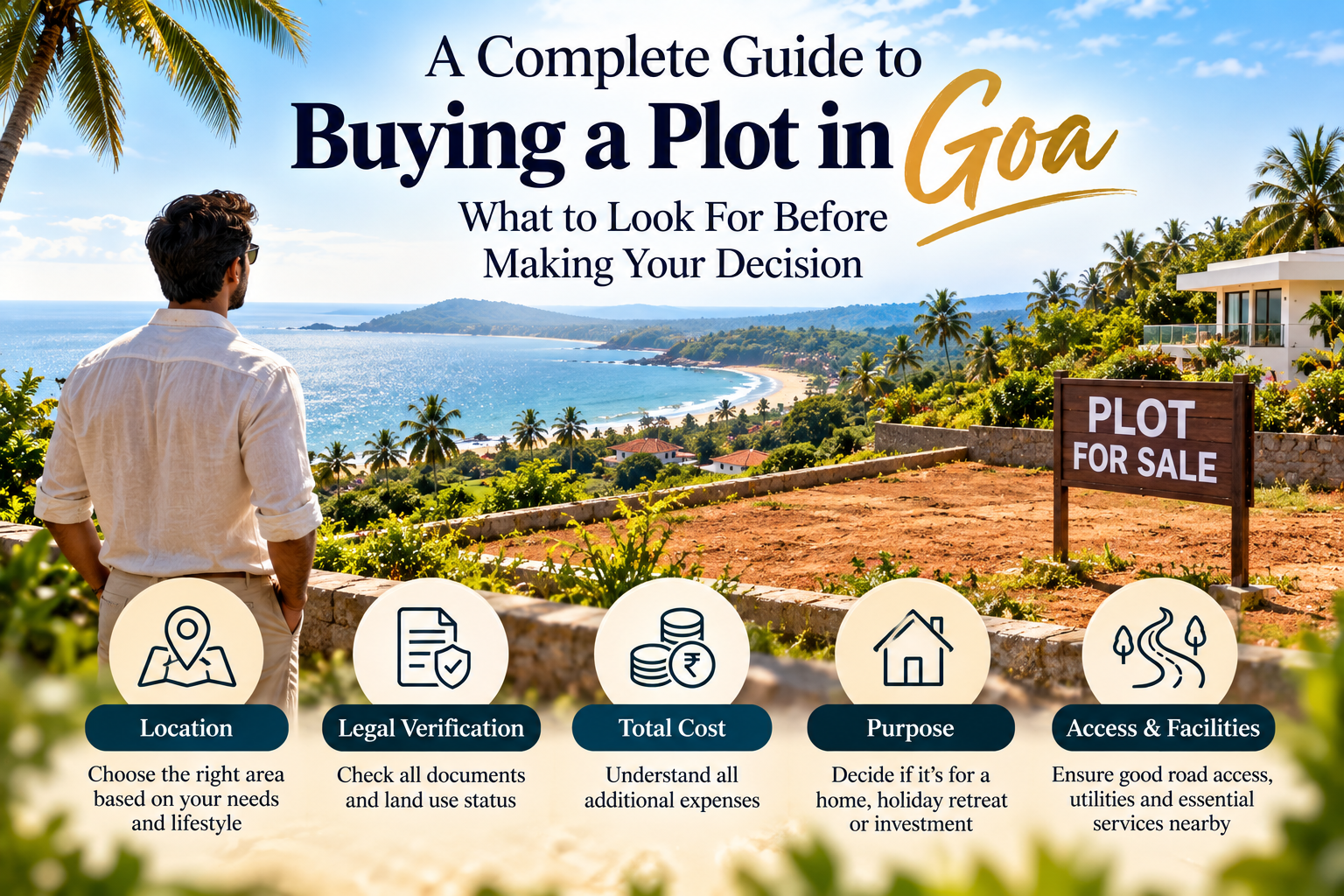
Location is one of the biggest factors to consider when buying a plot in Goa.
North Goa is often considered by buyers who prefer lively surroundings, restaurants, entertainment options, and access to popular tourist areas. South Goa may appeal to people who prefer a quieter environment and a more relaxed pace of life. However, both regions have different neighbourhoods, and the experience can vary considerably from one location to another.
You should also explore areas based on your practical needs.
Ask yourself a few simple questions:
- How far is the property from the nearest main road?
- Are shops, hospitals, and other essential services accessible?
- Is the area suitable for permanent living or occasional holidays?
- Is public transport available nearby?
- Does the surrounding neighbourhood match your expectations?
- Are there any concerns about flooding, drainage, or access during heavy rain?
Visit the location in person if possible. Photographs can make a property look attractive, but they may not show the condition of the approach road, nearby construction, or the actual surroundings.
A good location is not necessarily the most expensive one. It is the one that suits your purpose and offers the facilities you genuinely need.
3. Decide What You Want to Do With the Plot
Before choosing a property, be clear about how you plan to use it.
If you want to build your dream home, focus on residential suitability, access to utilities, neighbourhood conditions, and the permissions required for construction.
If you want a holiday home, consider travel convenience, privacy, maintenance requirements, and access to places you enjoy visiting.
If your main purpose is investment, pay attention to the purchase price, legal status, market demand, and the possibility of selling the property in the future.
Some buyers also consider land for commercial or hospitality-related projects. In such cases, it is especially important to confirm whether the proposed activity is legally permitted on that particular land.
Do not assume that every plot can be used for residential construction simply because it is advertised for sale. Agricultural land, settlement land, and other land categories may have different rules and restrictions.
Your intended use should guide your property search from the beginning.
4. Understand the Total Cost of Buying a Plot
The advertised price is only one part of the total cost of buying land.
Depending on the transaction, you may need to budget for stamp duty, registration charges, legal advice, document verification, and other applicable expenses. If you plan to build a house later, construction, approvals, utility connections, and site preparation may add significantly to your budget.
For example, a plot that appears affordable may require additional spending on access arrangements, boundary work, drainage, or other improvements.
Before making an offer, ask for a clear breakdown of the expected costs. Keep some money aside for unexpected expenses instead of using your entire budget for the purchase itself.
You should also compare the prices of similar plots in the same area. Look at their size, location, access, land status, and available facilities.
Remember that two plots with similar dimensions may not have the same value. A legally suitable plot with reliable access may be more practical than a cheaper option with unresolved issues.
5. Check the Legal Documents Before Paying
Legal verification is one of the most important steps in any land purchase.
A property may look perfect during a site visit, but you need to confirm that the seller has the legal right to sell it and that the land can be used for your intended purpose.
Before paying a substantial advance, ask an independent local property lawyer to examine the relevant documents.
Important checks include:
- Title and ownership: Verify the ownership history and the seller’s legal rights.
- Land records: Review the relevant land records and survey details.
- Encumbrances: Check for registered mortgages, claims, or other legal burdens, as applicable.
- Plot boundaries: Confirm the actual survey boundaries and area.
- Access rights: Verify that the property has lawful and practical access.
- Land use: Check the current land classification and whether your proposed use is permitted.
- Approvals: Confirm the applicable permissions and development requirements before planning construction.
Do not rely only on verbal assurances from a seller or agent. Also, do not assume that a mutation entry, tax receipt, or single certificate alone proves clear ownership.
The exact documents required will depend on the property and its legal circumstances. Independent verification can help you identify problems before they become expensive.
6. Think About Future Value, but Stay Realistic
Many people buy land because they hope its value will increase over time.
Goa’s lifestyle appeal and tourism activity can attract property buyers, but this does not mean every plot will deliver strong returns. Property prices depend on local demand, infrastructure, legal status, accessibility, development restrictions, and wider market conditions.
A location that is popular today may not suit every buyer’s budget or investment timeline. Similarly, future development plans should not be treated as a guarantee of higher prices.
If you are buying for long-term investment, consider how easily the property might appeal to future buyers. Clear documents, practical access, suitable land use, and a sensible purchase price can all matter when you eventually decide to sell.
Avoid making a decision based only on claims of guaranteed appreciation. Compare available properties, research the local market, and consider whether you can hold the land comfortably if it takes longer than expected to sell.
Land can be a long-term asset, but it is not always easy to sell quickly when you need money.
7. Can You Build Your Dream Villa on the Plot?
One of the biggest attractions of buying land is the freedom to design your own home.
You might imagine a spacious villa with a garden, an outdoor seating area, large windows, and plenty of natural light. However, the size and design of the house will depend on the plot’s legal status, applicable building regulations, permitted development, setbacks, and other local requirements.
Before buying, check whether the property is suitable for your proposed construction.
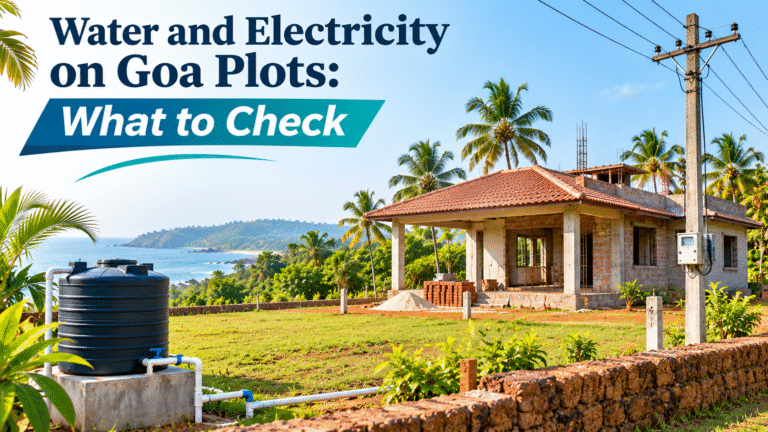
Consider the availability of water and electricity, drainage arrangements, road access for construction vehicles, and the likely cost of preparing the site.
You should also speak with a qualified architect or other relevant professional before finalising plans. They can help you understand whether your preferred design is practical within the applicable rules.
If you are exploring property opportunities across Goa, GoaPlot.in is a useful starting point for discovering listed projects and available property options. Compare the details carefully and confirm all important information independently before making a purchase.
The key is to choose land that matches your actual plans rather than buying a plot first and discovering its limitations later.
8. Do Not Forget Maintenance and Other Responsibilities
Even when you buy vacant land and do not build immediately, the property may still require attention.
You may need to maintain the boundaries, keep the site clear, check drainage, and arrange periodic inspections. If you live in another city, managing the property from a distance can require extra time and money.
There may also be local requirements, applicable taxes, or other obligations to consider, depending on the property.
Think about how you will look after the land after buying it. If you intend to build several years later, include maintenance costs in your long-term plan.
Planning these expenses in advance can help you avoid surprises and make ownership more comfortable.
Conclusion
Buying a plot in Goa can be a meaningful step towards owning your dream home or building a long-term property investment. The right land can offer flexibility, privacy, and the opportunity to create a space that suits your lifestyle.
But a good purchase depends on more than an attractive location or a promising price.
Take time to understand the neighbourhood, compare similar properties, calculate the complete cost, and verify the legal documents. Make sure the land is suitable for your intended use and that you can comfortably manage the purchase without putting unnecessary pressure on your finances.
Most importantly, do not rush into a decision because of promises about future prices or development.
The best plot is not simply the one that looks attractive today. It is the one that fits your needs, has a properly verified legal status, and makes sense for your plans in the years ahead.